What We Inherit
How unhealed patterns become family traditions—and why some of them need to end with us

Disclaimer
This piece is not an endorsement of any public figure’s behavior, harm, or the chaos they’ve created. I’m referencing a line that became culturally sticky because it points to something bigger I keep seeing in real life. Mental health can explain patterns, but it doesn’t excuse impact. When someone has access to help and still refuses consistent care, the fallout becomes everybody else’s problem. That’s not something I overlook or defend.
A once-influential, iconic rapper who slowly turned into his own worst enemy once said:
“hater nggas marry hater b*****s and have hater kids.”*
It’s a reckless line. Ugly on purpose.
But the truth underneath it is uncomfortable because it’s true.
Most of us didn’t wake up one day and decide who we’d be.
We absorbed it.
We learned how to love by watching what love looked like in our house.
We learned how to argue by listening through walls.
We learned how to cope by noticing what never got addressed.
We inherited silence.
Defensiveness.
Avoidance.
Control.
People-pleasing.
Rage dressed up as protection.
And if we don’t stop and name it, we don’t just grow up with it.
We pass it down.
Not because our parents were evil.
But because unhealed people teach from survival, not intention.
That’s how cycles stay alive.
That’s how trauma gets normalized.
That’s how “this is just how I am” quietly becomes a family heirloom instead of something we question.
A lot of us are walking around parenting from muscle memory.
Reacting before we reflect.
Correcting our kids the same way we were corrected.
Withholding affection the same way it was withheld from us.
Calling it discipline when it’s really fear.
And then we wonder why things feel heavy.
Why our homes feel tense.
Why our children are anxious, angry, shut down, or acting out in ways we don’t recognize.
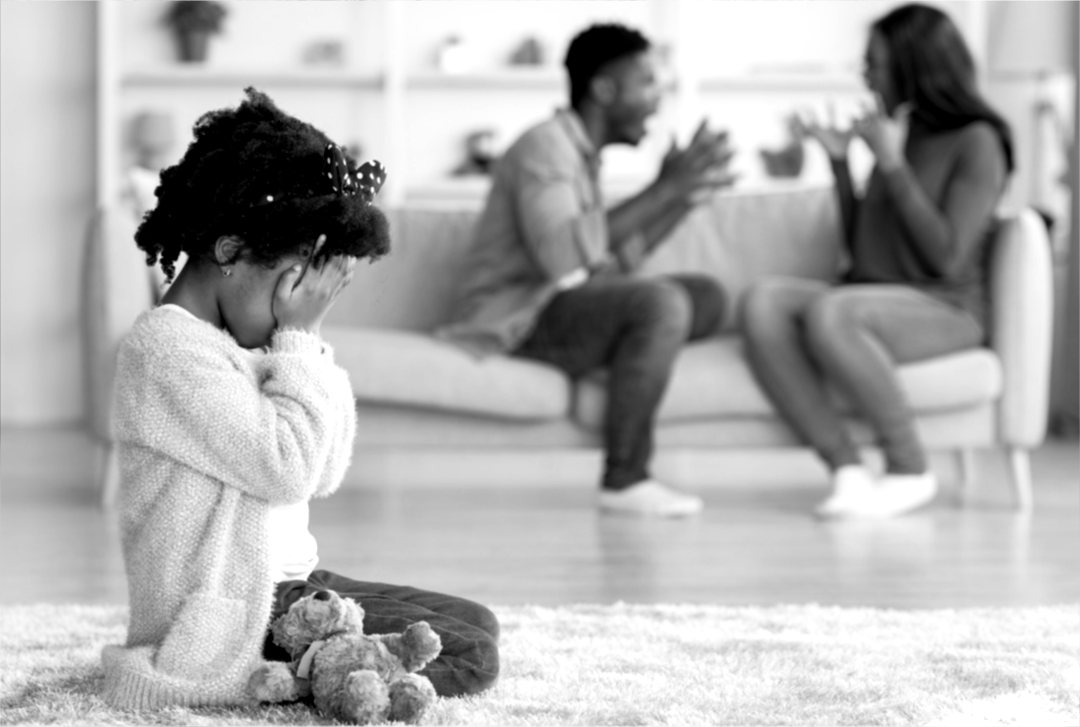
Learn More About The Impact of Parental Conflict on Children’s Emotional Regulation Here
Breaking generational curses isn’t dramatic.
It’s not a speech.
It’s not a post.
It’s not a viral moment.
It’s noticing the familiar behavior rise up in you and choosing something harder instead.
It’s catching yourself mid-reaction and asking, who taught me this?
It’s realizing love doesn’t have to be loud to be real.
It’s understanding safety doesn’t come from control.
It comes from consistency.
It’s saying, this ends with me,
and then actually doing the work when it’s inconvenient, unglamorous, and lonely.
Because our children don’t just inherit our DNA.
They inherit our emotional habits.
They learn how to love by watching us love.
They learn how to regulate by watching how we handle stress.
They learn what’s acceptable by what we tolerate.
So the real question isn’t who raised us.
It’s who we’re choosing to become now that we know better.
Generational curses don’t end with prayer. They end when we get honest about what happened to us and make the necessary changes.